
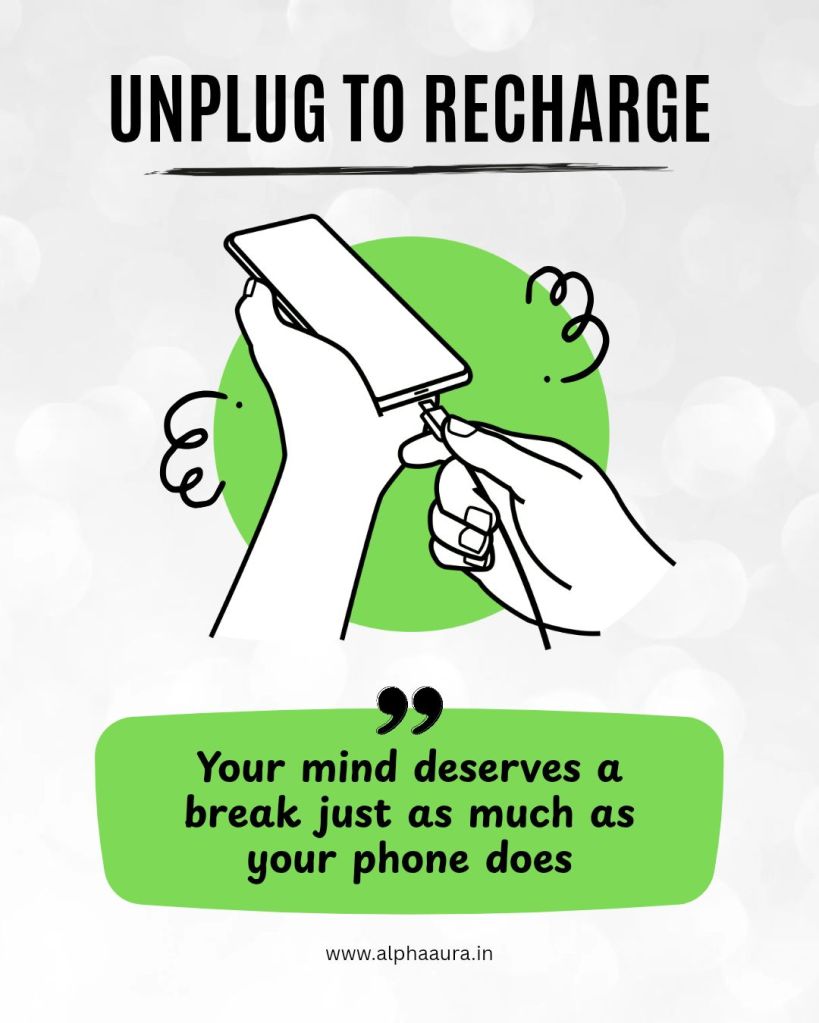
The Day I Decided to Quit Being a Dopamine Junkie
Last Tuesday, I did something radical. Something that would make my teenage self laugh and my current self cry. I decided to do a dopamine detox.
For those blissfully unaware, a dopamine detox is when you voluntarily give up all the things that make life bearable—your phone, social media, Netflix, online shopping, and basically anything that brings you a millisecond of joy. The idea is to “reset” your brain from all the instant gratification we’ve become addicted to.
I read about it in an article titled “How to Reclaim Your Life from Your Phone.” The irony that I was reading this article ON my phone while ignoring my family was not lost on me.
The Man of the House looked up from his own phone (he was watching cricket highlights for the fourteenth time) and asked, “What are you reading?”
“An article about how we’re all dopamine addicts,” I replied, scrolling through the comments section to see if anyone else thought this was as ridiculous as I did.
“Hmm,” he said, returning to his phone.
That’s when I decided: Tomorrow, I will do a dopamine detox. No phone. No social media. No mindless scrolling. Just me, my thoughts, and the terrifying prospect of actually being present in my own life.
How hard could it be, hai na?
Hour 1: The Optimistic Beginning
I woke up at 6 AM (without my phone alarm, thank you very much—I used an actual alarm clock that I found buried in the back of a drawer like an archaeological relic).
First thought: Check phone.
Second thought: No! Dopamine detox! I am STRONG! I am FOCUSED! I am… panicking slightly.
I went to the kitchen to make chai. Usually, I make chai while scrolling through WhatsApp messages, Instagram stories, and mentally cataloging all the things I should be worried about based on news notifications. Without my phone, making chai felt oddly… peaceful?
Or maybe just boring. Hard to tell the difference at 6:15 AM.
The prodigal son wandered in, looking for his phone charger. “Mom, where’s my charger?”
“I don’t know. Maybe try looking for it instead of asking me?”
He stared at me like I’d suggested he build a charger from scratch using twigs and determination.
“What’s wrong with you?” he asked suspiciously.
“I’m doing a dopamine detox.”
“A what?”
“I’m not using my phone today.”
He laughed. Actually laughed. “Sure, mom. I give you two hours.”
Challenge accepted, child.
Hour 3: The First Signs of Trouble
Breakfast was strange without my phone. Usually, I eat while checking emails, responding to messages, and watching
reels of people cooking better breakfasts than mine. Today, I just… ate. And looked at my family.
They were all on their phones.
The Man of the House was reading cricket scores. The prodigal son was watching something with explosions. The baby was playing a game that involved feeding a cartoon cat.
I was sitting there like an extra in my own life, with nothing to do but chew and think.
Thinking, I realized, is vastly overrated.
“So,” I said brightly, “shall we have a conversation?”
Three heads looked up.
“About what?” asked the Man of the House, with the wariness of someone who suspects this is a trap.
“Anything! The weather? Current affairs? The meaning of life?”
“It’s hot,” he said, returning to his phone.
“Very hot,” agreed the prodigal son, also returning to his screen.
The baby ignored me entirely.
This was going well.
Hour 5: The Phantom Phone
I reached for my phone approximately forty-seven times between breakfast and lunch.
To check the time. To see if anyone had messaged. To look up how long to boil eggs (spoiler: I’ve been boiling eggs for twenty years, I don’t actually need Google). To photograph my chai cup for Instagram. To check the weather, even though I could just look out the window. To verify a random fact I was thinking about (do dolphins really sleep with one eye open? The world may never know).
Each time, I had to physically stop my hand mid-reach, like some sort of recovering addict.
The Man of the House noticed. “How’s the detox going?”
“Wonderfully,” I said through gritted teeth. “I’ve never felt more present and alive.”
“You’ve checked your watch seventeen times in the last hour.”
“I’m very concerned about time management today.”
Hour 7: The Lunch Crisis
Lunchtime presented a new challenge: What do people do while eating lunch if they’re not scrolling through their phones?
I tried reading a physical book. A PHYSICAL BOOK. Made of paper. Remember those?
It was oddly satisfying. No notifications. No suddenly dimming screen asking if I’m still there. No accidental pocket-dials to random contacts. Just words on a page.
Then the doorbell rang.
My neighbor stood there, looking concerned. “Are you okay? You haven’t posted anything today. I thought maybe you were sick.”
“I’m doing a dopamine detox.”
“A what now?”
“I’m not using my phone.”
She looked at me the way one might look at someone who announced they’re giving up breathing. “But… how will you know what’s happening?”
“In the world?”
“On Instagram.”
This is what we’ve become. A species that measures world events in Instagram stories.
“I’ll survive,” I said, with more confidence than I felt.
Hour 10: The Afternoon Slump
By 3 PM, I had:
- Cleaned a cupboard that hadn’t been touched since 2019
- Reorganized my spice rack alphabetically (then by color, then by frequency of use)
- Had an actual conversation with my mother (on the landline, like it was 1995)
- Stared at the wall for a solid ten minutes
- Questioned all my life choices
Without the constant dopamine hits from notifications, likes, and messages, my brain felt like a toddler who’d been promised ice cream and given broccoli instead. Confused. Slightly betrayed. Very cranky.
I found myself doing bizarre things: Looking out the window at actual clouds instead of photographing them. Listening to birds instead of podcasts about productivity. Sitting still without immediately reaching for a distraction.
It was unsettling.
The Man of the House found me staring blankly at the bookshelf. “Are you having an existential crisis?”
“No, I’m just… being.”
“You look constipated.”
“That’s my ‘present and mindful’ face.”
“Ah.”
Hour 12: The Discovery
Here’s what I discovered around hour twelve: Without my phone, I had time. Oceans of time. Mountains of time. So much time that I didn’t know what to do with it.
I’d always complained about not having enough time. Turns out, I had plenty of time. I was just spending it watching strangers organize their refrigerators on Instagram and reading Twitter fights between people who would never agree on anything.
I also discovered that my attention span had apparently shrunk to that of a goldfish on speed. I started reading a article in a magazine and after two paragraphs, my hand automatically reached for my phone to check… nothing. Just to check.
The addiction was real.
I’d become like one of Pavlov’s dogs, except instead of salivating at a bell, I was reaching for my phone at every moment of potential boredom, discomfort, or actual human interaction.
Hour 15: The Evening Revelation
Dinner was interesting. We sat at the table—all of us—without devices.
The baby looked confused. “Mama, where’s your phone?”
“Mama’s taking a break from her phone.”
“Why?”
Good question, child. WHY?
“Because… mama was spending too much time on it.”
“Like Dada spends too much time on cricket?”
The Man of the House choked on his dal.
“Yes,” I said, shooting him a look. “Exactly like that.”
We ate in relative silence, punctuated by actual conversation about actual things that happened in actual real life. It was almost… nice?
The prodigal son told us about his day (without me having to wrestle the information out of him). The baby sang a song she’d learned in school. The Man of the House complained about work (which he usually does on phone calls with his friends while I’m in the room pretending I’m not listening).
I realized something: We’d been living in the same house but existing in different digital worlds. My family had become like roommates who occasionally made eye contact.
Hour 18: The Withdrawal Symptoms
By evening, the withdrawal symptoms hit hard.
I felt twitchy. Anxious. Disconnected from the world. What if there was an emergency? What if someone needed me? What if something important was happening and I was missing it?
(Spoiler: There wasn’t. No one did. Nothing was.)
But the fear was real. We’ve convinced ourselves that we need to be reachable, available, and informed at every single moment. As if the world will collapse if we don’t respond to a WhatsApp message within sixty seconds.
I found myself hovering near my phone like a moth near a flame.
“Just one quick check,” I told myself. “Just to make sure nothing’s on fire.”
The Man of the House caught me. “I thought you were detoxing.”
“I am! I’m just… making sure the phone still works.”
“By staring at it intensely?”
“It’s a visual check.”
He removed the phone from my vicinity. “You’re worse than the kids when I take away their devices.”
He wasn’t wrong.
Hour 20: The Unexpected Peace
Something weird happened around 8 PM.
I stopped thinking about my phone.
I was sitting in the balcony, just sitting, watching the evening turn into night. No phone. No book. No podcast. Just me and my thoughts and the sounds of the neighborhood.
And it was… okay?
My brain, having exhausted all its arguments for why I NEEDED to check my phone RIGHT NOW, finally gave up and settled into something resembling calm.
I noticed things: The way the light changed. The smell of someone cooking biryani in a nearby flat. The sound of children playing in the compound. The Man of the House humming while reading his actual newspaper (yes, we still get those).
These things were always there. I’d just been too busy scrolling to notice.
Hour 24: The Finish Line
I made it. Twenty-four full hours without my phone.
The prodigal son was shocked. “You actually did it.”
“I did.”
“How do you feel?”
Honestly? Weird. Proud. Slightly lost. Like I’d completed a marathon but wasn’t sure why I’d signed up for it in the first place.
When I finally picked up my phone, I had:
- 247 WhatsApp messages (mostly from family groups sharing good morning images and forwarded jokes)
- 89 emails (mostly promotional offers for things I don’t need)
- 34 Instagram notifications (people who liked my last post from three days ago)
- 12 missed calls (half were spam)
I’d thought the world would have moved on without me. That I’d have missed something crucial. That disconnecting for 24 hours would have consequences.
Instead, I’d missed:
- Photos of food I didn’t eat
- Political arguments I wasn’t part of
- Celebrity news that didn’t affect my life
- Shopping deals on things I didn’t need
- News headlines designed to make me anxious
Nothing. I’d missed nothing.
What This Dopamine Detox Taught Me (Besides Humility)
1. My Phone Isn’t the Problem—I Am
The phone is just a tool. I’m the one who picks it up 150 times a day. I’m the one who can’t sit through a meal without checking it. I’m the one who uses it to avoid being present in my own life.
Blaming the phone is like blaming the refrigerator for your weight gain. Technically, it’s involved, but it’s not forcing you to do anything.
2. Boredom Is Not an Emergency
Somewhere along the way, we decided that boredom is a problem that needs immediate solving. The moment we feel even slightly unstimulated, we reach for our phones.
But boredom is where creativity lives. It’s where thinking happens. It’s where your brain gets to rest instead of constantly processing information.
I’d forgotten that.
3. We’re Missing Our Own Lives
The baby sang a song at dinner. When’s the last time I actually listened to her sing without half my attention on my phone?
The Man of the House made a joke. Did I laugh, or did I just say “hmm” while scrolling through Instagram?
The prodigal son told me about his day. Was I really listening, or was I mentally composing a response to an email?
I’d been physically present but mentally checked out.
4. FOMO Is a Lie
The Fear Of Missing Out is what keeps us glued to our screens. But here’s the truth: The more time I spent on my phone, the more I was missing out on actual, real life happening right in front of me.
The truly important things—my family, my relationships, my peace of mind—don’t exist online. They exist here, in the real world, waiting for me to look up from my screen.
5. Dopamine Hits Are Empty Calories
Every like, every notification, every message gives us a tiny dopamine hit. It feels good for a second, and then we need another one. And another. And another.
It’s like eating chips. Momentarily satisfying, ultimately unsatisfying, and before you know it, you’ve consumed an entire bag and feel vaguely nauseous.
Real satisfaction—from finishing a book, having a meaningful conversation, creating something, or just sitting peacefully—takes longer to achieve but actually fills you up.
The Plan Going Forward (Because 24 Hours Isn’t a Solution)
I’m not throwing away my phone. I’m not becoming one of those people who announces they’re “taking a social media break” every three months (we all know someone like that—they’re back within a week).
But I am making some changes:
Morning Phone-Free Hour No phone for the first hour after waking up. Make chai, eat breakfast, have actual conversations. Start the day as a human, not a notification-responding robot.
Meal Times Are Sacred No phones at the table. Period. If the house is on fire, someone can tell us in person.
Phone Bedtime Phone goes to another room at 10 PM. No scrolling in bed. No checking “just one more thing” at midnight. Sleep happens in beds, not while clutching a glowing rectangle.
Delete the Time-Suckers That game I play while pretending I’m “just taking a quick break”? Gone. The shopping apps that somehow know exactly what I was thinking about buying? Deleted. The social media apps? Moved to a folder I have to actually search for.
Replace Scrolling with Something Real Instead of reaching for the phone when I’m bored, I’ll try:
- Reading an actual book
- Calling a friend (shocking, I know)
- Taking a walk
- Sitting and doing nothing (this still feels wrong, but I’m working on it)
The Uncomfortable Truth We All Know
Here’s what I learned from my dopamine detox that nobody wants to hear:
We’re not addicted to our phones because they’re so great. We’re addicted to our phones because they help us avoid things we don’t want to deal with:
- Boredom
- Uncomfortable emotions
- Difficult conversations
- Our own thoughts
- The reality that life is sometimes mundane and that’s okay
The phone is our escape hatch from being human.
Every time I reached for my phone during the detox, I asked myself: What am I avoiding right now?
Usually, the answer was: Nothing. Just sitting with myself. And that felt scarier than doom-scrolling through bad news and strangers’ vacation photos.
What About You?
If you’re reading this on your phone right now (and let’s be honest, you probably are), ask yourself:
When’s the last time you:
- Ate a meal without checking your phone?
- Sat in silence without immediately reaching for a distraction?
- Had a conversation where you weren’t also half-scrolling through something?
- Went an entire day without wondering what you’re missing online?
- Felt truly present in your own life?
I’m not suggesting everyone do a 24-hour dopamine detox. I barely survived mine, and I had the personality of a grumpy toddler for most of it.
But maybe start small:
- One phone-free hour a day
- No phones during meals
- One day a week with limited social media
- Leaving the phone in another room while you work
- Turning off non-essential notifications
Because here’s the thing: Life is happening right now. Not on your screen. Not in someone else’s Instagram story. Right here, in this moment, in your actual, messy, imperfect, beautiful life.
And you’re missing it.
The Final Word
Did the dopamine detox fix all my problems? No.
Am I suddenly a zen master who never touches her phone? Also no.
But it did give me something valuable: A reminder that I’m in control. The phone doesn’t run my life unless I let it.
And that’s worth more than all the likes, shares, and notifications in the world.
Now if you’ll excuse me, I need to check my phone. Not because I’m addicted (okay, maybe a little), but because the Man of the House just sent me a cricket meme and apparently, it’s “very funny” and I “have to see it right now.”
Some things never change. But at least now I’m aware that I’m choosing to look. And sometimes, I’m choosing not to.
That’s something, hai na?
P.S. – If you made it to the end of this article without checking your phone, congratulations. You have better self-control than I do. If you checked your phone three times while reading this, welcome to the club. We meet every day, everywhere, with our eyes glued to our screens.
P.P.S. – The baby just asked if she can have my phone “just for five minutes” to play her game. I said no. She’s now giving me the same look I give my phone when it’s in another room. We’re all addicts here. But at least we’re aware addicts. That counts for something. Right? Right??


 NurtureNest
Leave a comment